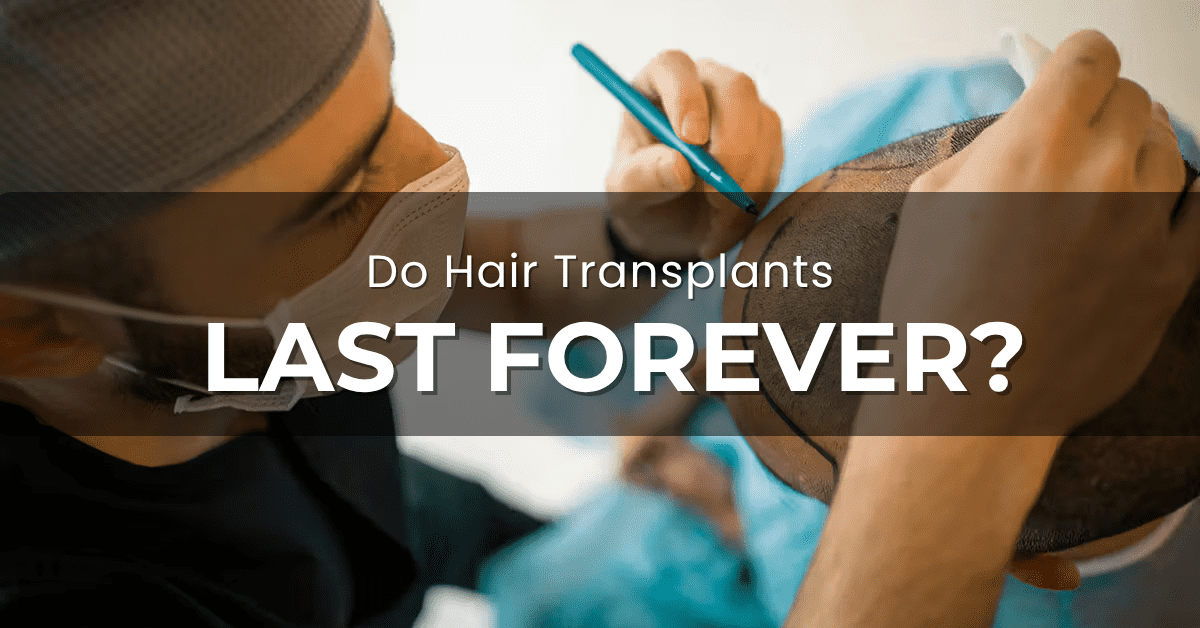
Do Hair Transplants Last Forever? What You Need to Know
Hair loss affects more than just your appearance — it impacts your confidence, self-esteem, and even how you feel about yourself in social or professional settings. Whether you’re noticing your hairline recede, your crown thinning, or sudden shedding, you’ve likely explored various options — from topical treatments and supplements to laser caps and PRP therapy.
But among all the solutions, hair transplantation stands out as the most definitive and lasting fix. Still, one question remains on almost every patient’s mind:
“Do hair transplants last forever?”
Let’s break down the science, dispel the myths, and understand what really determines the longevity of a hair transplant — so you can make an informed decision about your hair restoration journey
Understanding the Science Behind Hair Transplants
A hair transplant works by relocating healthy, DHT-resistant follicles from one part of your scalp (usually the back or sides, called the donor area) to areas where hair has thinned or fallen out (recipient sites).
DHT, or dihydrotestosterone, is the hormone responsible for pattern baldness in both men and women. However, hair on the back and sides of the scalp is genetically resistant to DHT, which is why these follicles usually continue growing even when others fall out.
At Aquaporin Aesthetics Clinix, our specialists use advanced surgical techniques to ensure that transplanted follicles are precisely placed for maximum growth, density, and natural appearance.
The Two Main Hair Transplant Techniques
- FUT (Follicular Unit Transplantation) – Involves removing a small strip of scalp tissue from the donor area, dissecting it into follicular units, and implanting them into the thinning zones.
- Benefits: High graft yield, good for larger coverage.
- Limitations: Linear scar, slightly longer healing time.
- FUE (Follicular Unit Extraction) – Involves extracting individual hair follicles directly from the donor site and transplanting them one by one into the recipient area.
- Benefits: Minimal scarring, quicker recovery, natural-looking results.
- Limitations: Slightly longer procedure, requires advanced skill.
Both methods can produce excellent, natural outcomes — the key is choosing the right technique for your hair type, pattern of loss, and long-term goals.
Do Hair Transplants Last Forever? The Honest Answer
In simple terms: Hair transplants are permanent — but their appearance may evolve over time.
Here’s why: The transplanted hair follicles, being DHT-resistant, typically last for a lifetime. Once these follicles have successfully taken root and begun producing new hair (usually within 3–4 months post-surgery), they continue to grow naturally — just like the rest of your hair.
However, the non-transplanted hair surrounding these new follicles can still thin due to aging, hormonal changes, or ongoing pattern hair loss. This is why some people may experience additional thinning in untreated areas years later, even though the transplanted hair remains intact.
At Aquaporin Aesthetics Clinix, our surgeons always plan transplants strategically — taking future hair loss progression into account. This ensures that your results remain balanced and natural-looking over the long term.
What Factors Affect How Long Hair Transplants Last?
1. The Surgeon’s Skill and Technique
The longevity of a hair transplant begins with the hands that perform it. Experienced surgeons know how to handle grafts delicately, ensure optimal blood supply, and place follicles at the correct angle and density for long-term survival.
At Aquaporin Aesthetics Clinix, every transplant is performed by board-certified specialists using state-of-the-art equipment for maximum graft survival.
2. Your Post-Operative Care
How you care for your scalp after surgery directly influences success. Following your surgeon’s aftercare instructions — avoiding scratching, sweating, and sun exposure — helps ensure the grafts properly anchor and thrive.
3. Underlying Health and Lifestyle
A healthy scalp supports strong hair growth. Smoking, stress, poor diet, and lack of sleep can all affect blood circulation and hinder follicle health. Maintaining a balanced diet rich in vitamins (especially Biotin, Vitamin D, and Zinc) promotes lasting results.
4. Hormonal Changes and Genetics
While transplanted hair is resistant to DHT, your native hair might not be. Over time, if hormonal imbalances or genetic factors continue to cause thinning, some patients may consider touch-up sessions or medical maintenance therapies.
5. Age and Natural Aging Process
Even though transplanted hair is permanent, it’s not immune to the normal aging process. Over decades, some mild thinning may occur as part of your body’s natural evolution. Proper care and early intervention can keep your hair looking youthful longer
Common Myths About Hair Transplants Debunked
❌ Myth 1: Hair transplants fall out after a few years.
✅ Truth: The transplanted follicles are permanent and designed to grow for a lifetime. The initial shedding after surgery (called shock loss) is temporary — the roots remain intact and regrow within a few months.
❌ Myth 2: You’ll need multiple transplants to maintain your results.
✅ Truth: One well-planned procedure can last for decades. However, as your native hair continues to thin, some people opt for small “refinement” sessions later to enhance density.
❌ Myth 3: Hair transplants look fake or “pluggy.”
✅ Truth: Gone are the days of unnatural-looking results. At Aquaporin Aesthetics Clinix, our advanced FUE technique ensures precise follicle placement, matching your natural growth pattern for seamless blending.
❌ Myth 4: Hair transplants stop future hair loss completely.
✅ Truth: Transplants restore hair in balding areas, but they don’t prevent future loss in untreated zones. That’s why combining your procedure with maintenance treatments like PRP therapy or Minoxidil is recommended.
❌ Myth 5: Hair transplants are painful and risky.
✅ Truth: Modern procedures are minimally invasive, performed under local anesthesia, and have minimal downtime. Most patients return to regular activities within a few days.
The Growth Timeline: What to Expect After Surgery
Understanding the post-transplant growth cycle can help manage expectations:
- Weeks 1–3: Temporary shedding phase (shock loss).
- Months 2–4: Dormant phase — follicles rest before regrowth begins.
- Months 4–8: Noticeable new hair growth; strands begin to thicken.
- Months 9–12: Major transformation — fuller density and coverage.
- 12–18 Months: Final results — the transplanted hair matures, thickens, and blends naturally.
At Aquaporin Aesthetics Clinix, our medical team monitors your progress during every stage to ensure healthy, predictable growth.
How to Make Your Hair Transplant Last a Lifetime
Even though transplanted follicles are permanent, taking care of your overall scalp and hair health will enhance longevity and appearance. Here’s how:
- Follow Post-Op Instructions Religiously
Avoid scratching, sweating, or direct sunlight for the first few weeks. Keep your scalp clean and moisturized as recommended by your surgeon. - Use Recommended Hair Products
Mild, sulfate-free shampoos and serums designed for transplanted hair help maintain follicle health. - Incorporate Maintenance Therapies
PRP (Platelet-Rich Plasma) therapy or Low-Level Laser Therapy (LLLT) can boost blood circulation and support transplanted hair growth. - Take Prescribed Medications (if advised)
Finasteride or Minoxidil can help preserve non-transplanted hair and prevent further loss. - Adopt a Healthy Lifestyle
Nutrition, hydration, sleep, and stress management play a huge role in long-term scalp health. - Schedule Regular Checkups
At Aquaporin Aesthetics Clinix, we encourage routine follow-ups to assess your progress and ensure sustained results for years to come.
Expert Insight from Aquaporin Aesthetics Clinix
Every patient’s hair loss journey is unique — and so should be their treatment plan. At Aquaporin Aesthetics Clinix, our approach to hair restoration goes beyond transplantation. We focus on comprehensive scalp health, combining medical therapies, modern surgical techniques, and long-term maintenance plans to deliver results that truly last.
Our team of experienced surgeons and trichologists uses precision-driven FUE technology and microscopic graft handling to ensure high survival rates and natural aesthetics. We also provide detailed pre- and post-care guidance, empowering patients to protect their investment in their new hair.
Long-Term Outlook: What “Permanent” Really Means
The term “permanent” in hair transplantation doesn’t mean the hair is immune to every change. It means that the transplanted follicles are genetically resistant to the root cause of most hair loss — DHT.
So while those transplanted follicles will continue to grow, your surrounding natural hair may still change over time. That’s why strategic planning — especially when performed by experienced specialists like those at Aquaporin Aesthetics Clinix — is essential for ensuring your results age gracefully.
Think of it like this: A hair transplant gives you new, lifelong hair, but maintaining its appearance is a shared commitment between you and your clinic.
Are Hair Transplants Worth It?
Absolutely — when done right, a hair transplant is a life-changing investment in your confidence and well-being. It offers a permanent, natural, and low-maintenance solution to hair loss that can redefine how you see yourself.
To summarize:
- The transplanted hair is permanent and resistant to future loss.
- Results depend on surgeon skill, aftercare, and lifestyle factors.
- Maintenance treatments can preserve and enhance your outcome.
- A well-executed procedure can last a lifetime — both aesthetically and emotionally.
Ready to Start Your Hair Restoration Journey?
If you’re tired of temporary fixes and want a lasting, natural solution, it’s time to consult with the experts at Aquaporin Aesthetics Clinix.